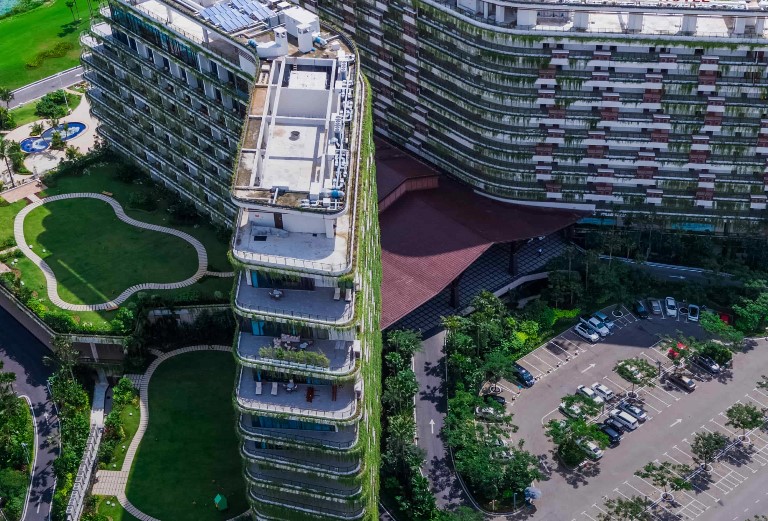
Malaysia is positioning its Forest City Special Financial Zone (SFZ) as a lower-cost alternative to Singapore for family offices, as rising costs in the city-state prompt wealth managers to explore secondary bases in Southeast Asia.
Launched in September 2024 within the Johor-Singapore Special Economic Zone, the SFZ offers targeted incentives aimed at attracting single family offices, financial institutions and related service providers.
Under the framework, qualifying family offices are offered a 0% tax on investment income for 10 years, extendable to 20 years subject to conditions. Approved financial and technology entities can access a 5% corporate tax rate, while qualifying skilled professionals are eligible for a 15% personal income tax rate.
Malaysian authorities said six single family offices have been approved under the scheme as of early 2026, with combined assets under management of about RM400 million. The government is targeting RM2 billion in AUM for the zone by the end of 2026.
The initiative comes as Southeast Asia attracts growing interest from globally mobile capital, with Singapore remaining the region’s primary hub. The city-state hosted around 2,700 single family offices as of mid-2025, supported by established regulatory frameworks and a deep ecosystem of advisers and service providers.
Industry participants say rising costs and capacity constraints in Singapore are prompting some clients to consider complementary structuring options in nearby jurisdictions. In this context, Malaysia’s SFZ is positioned as a secondary base, offering lower entry thresholds and operating costs.
The SFZ requires a minimum AUM of about RM30 million (roughly $7.5 million), below thresholds typically associated with Singapore and Hong Kong family office regimes.
Located about 2 km from Singapore, Forest City is expected to benefit from improved cross-border connectivity, including the Johor Bahru–Singapore Rapid Transit System, scheduled for completion in late 2026.
However, the zone remains at an early stage, with limited uptake so far, suggesting that execution, regulatory clarity and ecosystem development will be key to attracting larger pools of capital.
The development reflects a broader shift in Asia’s wealth landscape, where family offices are increasingly adopting multi-jurisdiction structures to balance cost, regulation and market access.